Eastfield
Project Overview:
Location: East Riding of Yorkshire
Architectural Designer: Gray Architectural Design
Project Type: Residential Extension, Retrofit & Renovation
Introduction:
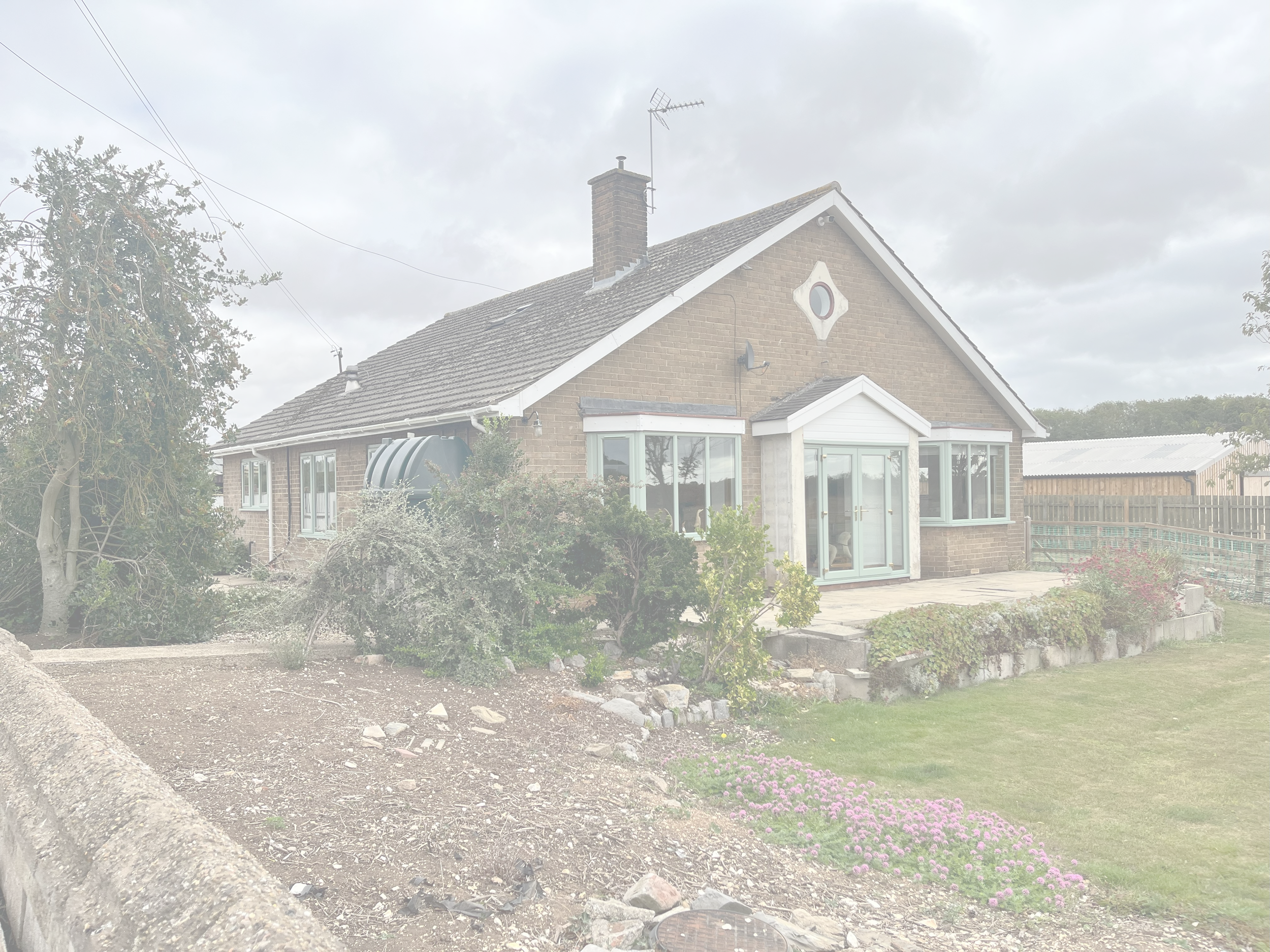
Eastfield is a detached rural dwelling located on Mill Lane in North Dalton, East Riding of Yorkshire. The project initially commenced with a focused brief: the client appointed Gray Architectural Design (GAD) to produce 3D visualisations of an already approved single-storey rear extension. The intention was to gain a clearer understanding of the scale, form, and spatial quality of the consented scheme prior to construction.
However, the process of exploring the approved design in three dimensions proved to be transformative. The visualisations highlighted opportunities to improve architectural proportions, internal volume, and the overall relationship between the house and its setting. As a result, the project evolved from a limited visualisation exercise into a comprehensive extension and retrofit scheme, addressing both spatial quality and long-term performance of the property.
Architectural Context:
Eastfield occupies a prominent rural plot within North Dalton and benefits from open views and a strong connection to its landscape setting. While the existing dwelling provided a solid foundation, it was clear that the house could benefit from a more cohesive architectural language and improved environmental performance.
GAD’s approach focused on unifying the existing building and proposed extension through proportion, materiality, and envelope upgrades, ensuring that the development felt considered and integrated rather than incremental.
Project Scope:
The scope of works developed into a coordinated package of extension, alteration, and retrofit measures, including:
Rear Extension
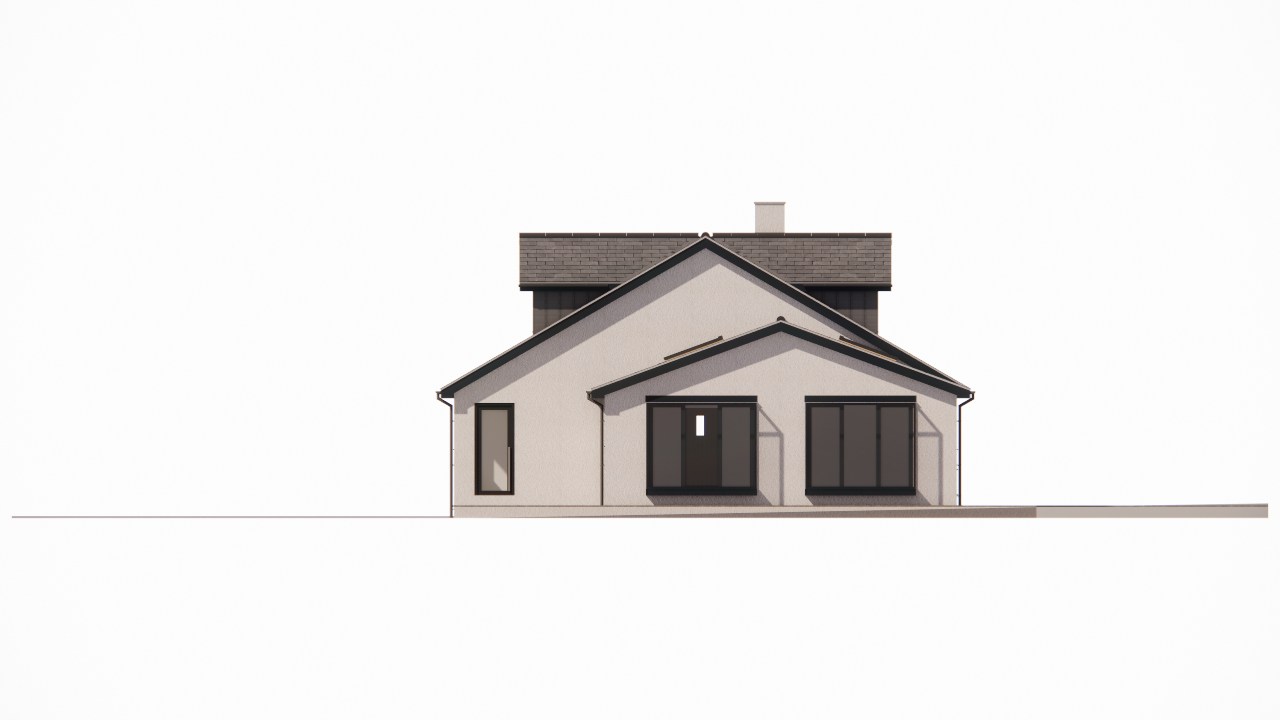
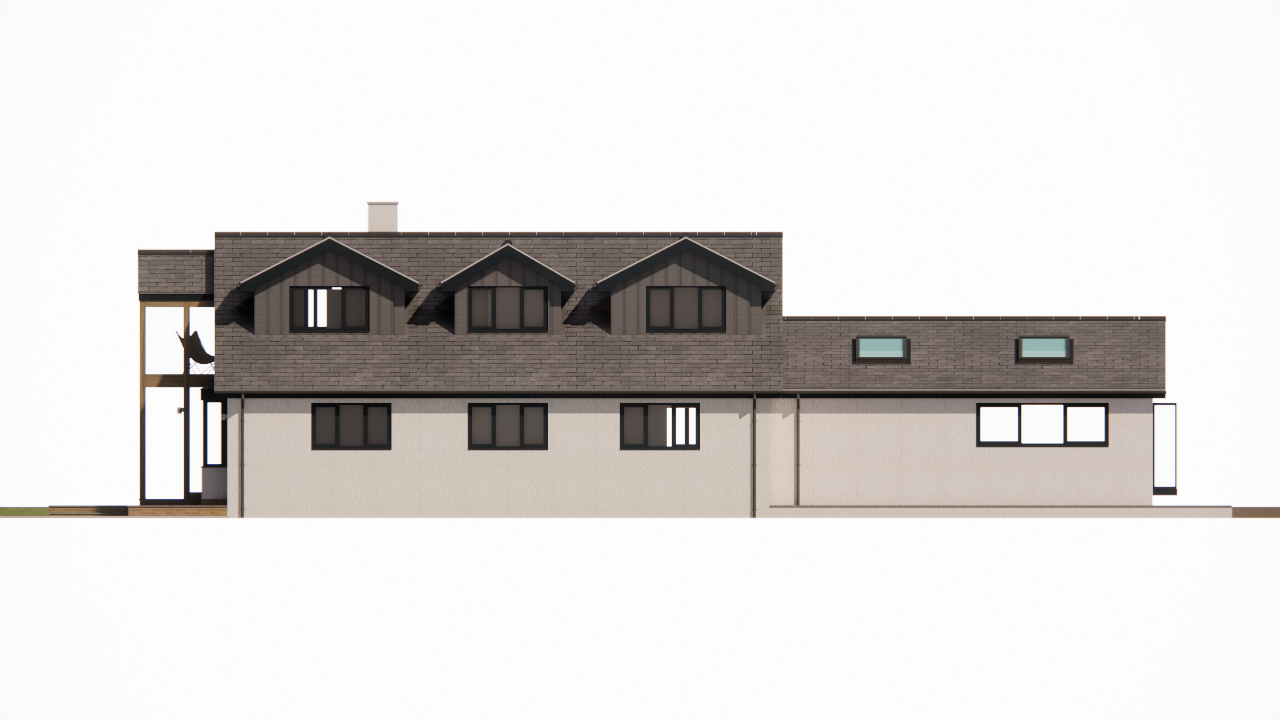
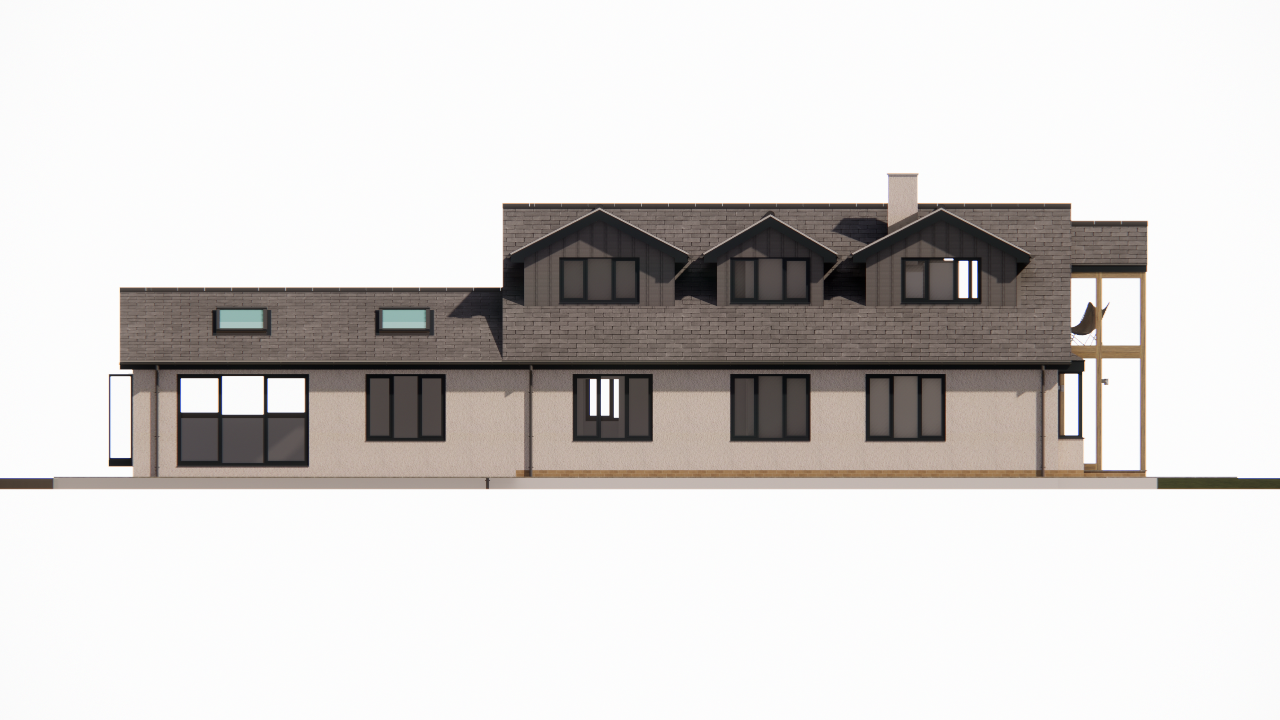
A single-storey rear extension with a retained footprint of approximately 70m², consistent with the original approval
Roof pitch increased from approximately 20° to 35°, improving massing and visual alignment with the main house
Introduction of a vaulted ceiling to enhance internal volume, daylight, and spatial quality
Hybrid construction using blockwork cavity walls
Natural slate roof finish
Large-format aluminium double-glazed sliding doors and windows to strengthen the connection with the garden
Front Porch Extension
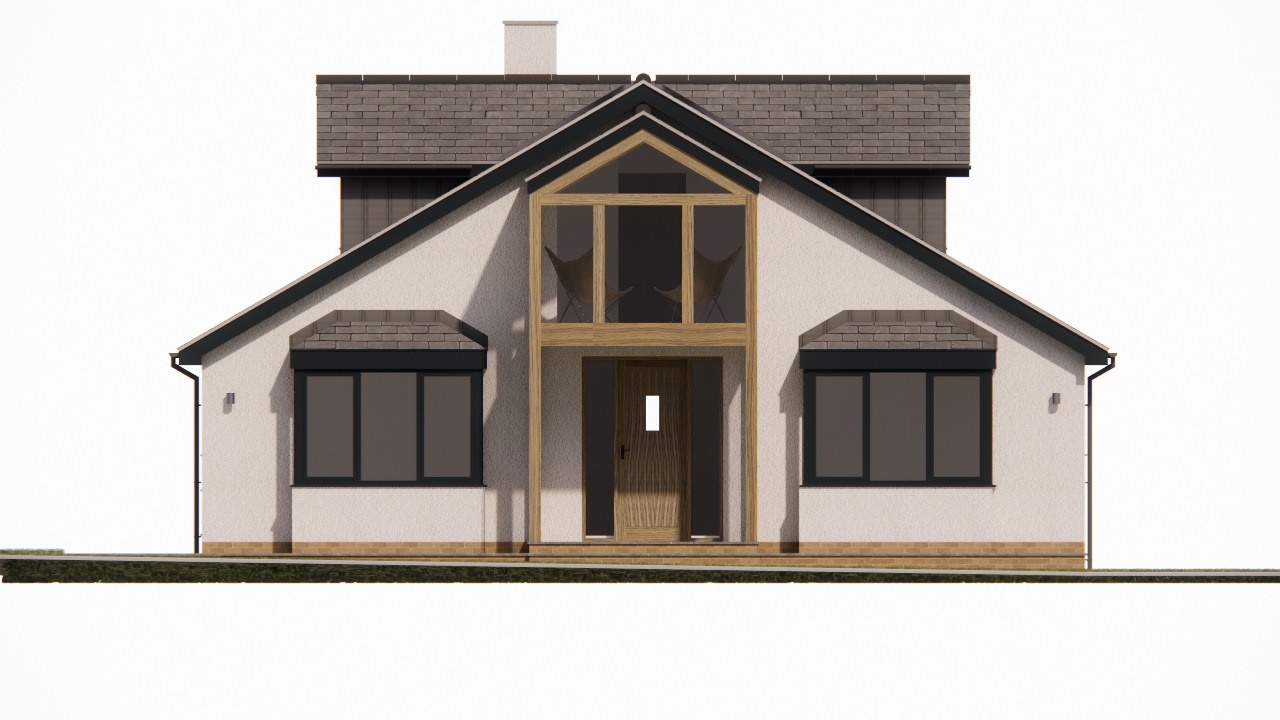
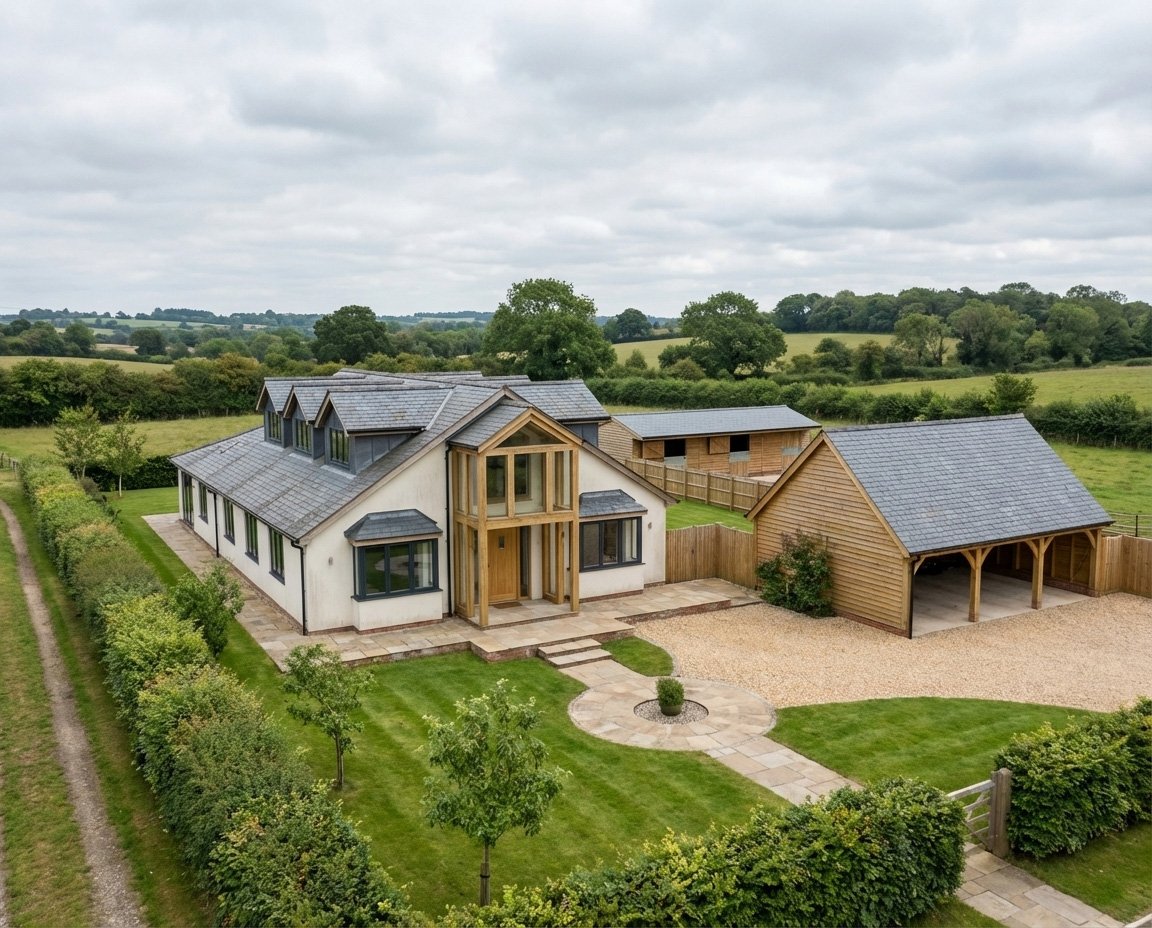
A new two-storey oak-framed front porch, submitted under a revised full planning application
Designed to provide a clear sense of arrival and improve the architectural hierarchy of the principal elevation
Oak framing selected to introduce warmth, craftsmanship, and rural character
Fabric & Retrofit Works
Retrofit wood fibre external wall insulation to the existing dwelling
Lime-based render finish to maintain breathability and moisture control
Off-white render specified to visually unify the existing house and new extension
Planning and Regulatory Considerations:
To deliver the expanded brief, GAD undertook the following planning work:
Full planning application for the proposed two-storey oak-framed porch and external wall insulation to the existing property
Coordination of the revised design strategy to ensure compliance with local planning policy and sensitivity to the rural context
Integration of planning and technical considerations to allow the project to progress efficiently into detailed design
The rear extension itself remained unchanged in footprint from the original approval, allowing the planning strategy to focus on architectural enhancement and fabric performance rather than increased scale.
Sustainability & Performance Strategy:
Sustainability was a key driver for the client and formed a central part of the design approach. A fabric-first strategy was adopted, prioritising:
Significant improvement to the thermal envelope
Breathable construction using wood fibre insulation and lime render
Reduced heat demand and improved internal comfort
Long-term durability and future adaptability
This approach ensures the dwelling achieves high levels of performance without reliance on complex or maintenance-heavy technologies.
Challenges and Considerations:
Design Evolution: Managing the transition from an approved but limited scheme to a broader, more ambitious project while retaining planning clarity
Architectural Coherence: Ensuring new elements—particularly the porch and rear extension—read as part of a unified whole
Buildability: Coordinating hybrid construction methods and materials to ensure practical and cost-effective delivery
Benefits and Outcomes:
The Eastfield project demonstrates how early-stage visualisation can act as a catalyst for meaningful design development. The scheme delivers:
Improved spatial quality and internal comfort
Enhanced architectural coherence across old and new elements
Substantial uplift in energy efficiency and environmental performance
Increased long-term value and adaptability of the property
What began as a request for 3D visuals evolved into a holistic upgrade of the home, aligning lifestyle aspirations, sustainability goals, and architectural quality.
Conclusion:
The Eastfield project is a strong example of Gray Architectural Design’s commitment to adding value beyond the initial brief. Through careful interrogation of an approved scheme, collaborative client engagement, and a robust fabric-first design approach, the project has developed into a thoughtful and future-proofed residential extension and retrofit.
As an experienced architectural technologist, GAD continues to guide the project through RIBA Stages 0–4, ensuring that design intent, technical resolution, and long-term performance are fully aligned.
For further information about this project, please feel free to contact Dean Gray, Gray Architectural Design.